ABA vs Floortime for a 3-Year-Old: What Families Need to Know

In short: ABA (Applied Behavior Analysis) uses structured teaching to build specific skills, often with data tracking, while Floortime is a child-led, play-based approach focusing on emotional connection and developmental milestones. Many families combine both or start with one. Your choice depends on your child's needs, family preferences, and available resources. Get ABA Therapy can match you with BCBA-led providers covered by insurance or Medicaid.
Key takeaways
- ABA and Floortime differ in philosophy: ABA is skill-focused and data-driven; Floortime is relationship-based and child-led.
- For a 3-year-old, both can be effective. ABA excels at building communication, daily living skills, and reducing challenging behaviors; Floortime targets social-emotional development and engagement.
- Many families use a blended approach, integrating elements of both therapies to meet their child's unique profile.
- Costs vary: ABA is often covered by insurance (including Medicaid) and can be intensive (20-40 hours/week); Floortime may be less structured and frequently paid out-of-pocket unless bundled with other services.
Understanding ABA and Floortime for Toddlers
When your 3-year-old receives an autism diagnosis, you want the best support possible. Two popular therapy approaches often come up: Applied Behavior Analysis (ABA) and DIR/Floortime (often just called Floortime). Both have strong evidence bases, but they work differently. This guide compares them so you can make an informed decision for your family.
Remember: there is no one-size-fits-all. Many children benefit from a combination of approaches. The most important thing is finding qualified professionals who respect your child and your values.

🔗 Related reading: When Play Looks Different: How ABA Can Help · Local ABA Therapy
What Is ABA Therapy for a 3-Year-Old?
ABA is a scientific approach that uses principles of learning and behavior to teach new skills and reduce behaviors that interfere with learning. For a 3-year-old, ABA often looks like structured play, discrete trial training in a natural environment, and positive reinforcement to encourage communication, imitation, and social skills.
How ABA Works With Toddlers
A Board Certified Behavior Analyst (BCBA) designs a program based on your child's needs. Sessions might involve:
- Teaching requesting (e.g., saying or signing "more" or "help")
- Building eye contact and joint attention through preferred toys
- Reducing tantrums by teaching replacement behaviors
- Practicing daily living skills like brushing teeth or putting on shoes
ABA is data-driven: your therapist tracks progress and adjusts strategies. For a 3-year-old, therapy is often play-based and naturalistic (e.g., using toys and routines). Intensity can range from 10 to 40 hours per week, depending on need.
Insurance and Cost for ABA
ABA is widely covered by commercial insurance and state Medicaid programs. Many states have mandates requiring coverage for autism therapy. Get ABA Therapy can help you find providers who accept your specific plan, including Medicaid. Costs without insurance can be high ($50-$150 per hour), but with coverage, copays are often manageable.
What Is Floortime (DIR/Floortime) for a 3-Year-Old?
Floortime, developed by Dr. Stanley Greenspan, is a developmental, relationship-based model. The acronym DIR stands for Developmental, Individual-differences, Relationship-based. For a 3-year-old, Floortime involves following the child's lead during play to build emotional connections and promote developmental progress through warm, engaging interactions.
How Floortime Works With Toddlers
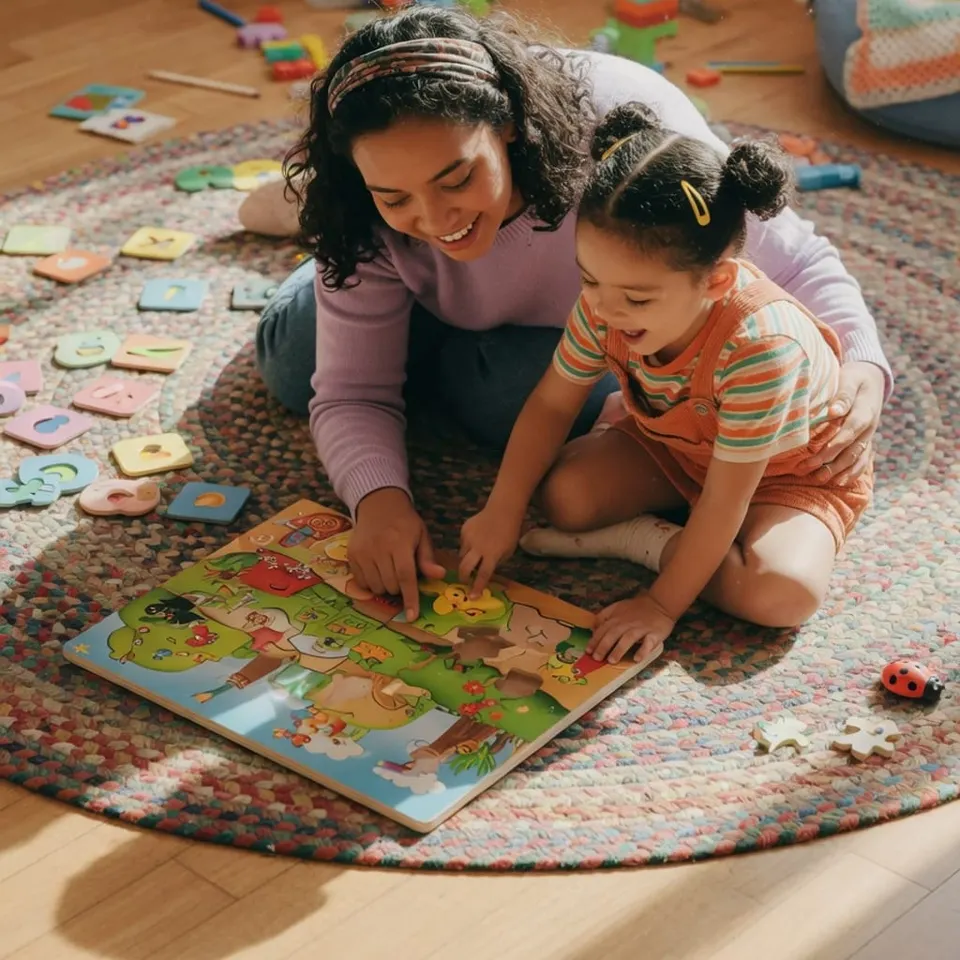
In Floortime, the adult gets down on the floor and joins the child's activity. The goal is to open and close "circles of communication" - back-and-forth interactions that build social-emotional skills. A session might include:
- Imitating the child's sounds or movements to create connection
- Gently introducing obstacles or surprises to encourage problem-solving
- Using affect and excitement to sustain shared attention
- Building language through meaningful, emotionally charged exchanges
Floortime is child-led and less structured than ABA. Sessions can be done by parents, with guidance from a trained Floortime practitioner. Intensity is often 2-5 hours of direct therapy per week, plus parent coaching.
Insurance and Cost for Floortime
Floortime is less consistently covered by insurance because it is not considered a "medical" model by some insurers. However, some plans cover Floortime if provided by licensed clinicians (e.g., speech therapists using a Floortime approach). Medicaid coverage varies by state. Many families pay out-of-pocket for parent coaching or direct sessions, ranging from $75 to $200 per hour.
🔗 Related reading: Flinching at Loud Noises: Autism & ABA Support · Local ABA Therapy
Key Differences at Age 3
Philosophy and Goals
- ABA: Focuses on observable behavior - teaching specific skills and reducing challenges. Goals are measurable (e.g., "child will independently request a snack 5 times per session").
- Floortime: Focuses on developmental capacities - emotional regulation, engagement, communication. Goals are about expanding circles of communication and fostering a sense of self.
Structure and Environment
- ABA: Can be structured (table work) or naturalistic (NET). Often uses reinforcement systems (e.g., tokens, praise). Sessions are typically 2-4 hours at a time with a therapist.
- Floortime: Unstructured, play-based, in natural settings. No external rewards; motivation comes from the relationship. Sessions are built around the child's interests.
Role of the Adult
- ABA: Adult directs the learning opportunities, though good ABA follows the child's motivation. The therapist is active in prompting and reinforcing.
- Floortime: Adult is a "play partner" who follows the child's lead, challenges gently, and supports emotional regulation.
Data and Progress Measurement
- ABA: Relies on frequent data collection (trials, percentages, frequency counts). Progress is graphed and reviewed continuously.
- Floortime: Uses developmental observation and parent reports. Progress is measured by moving through functional emotional developmental levels (FEDLs).
Which One Is Right for Your 3-Year-Old?
There is no simple answer. Consider your child's strengths and challenges:
- If your child has significant aggression, self-injury, or elopement (running away): ABA's intensive behavior intervention may be more effective initially to keep everyone safe.
- If your child is withdrawn, avoids interaction, or has a flat affect: Floortime's emphasis on warm engagement may help build foundational relating skills.
- If you want a structured path to language and daily living skills: ABA provides clear teaching steps and reinforcement.
- If you want to strengthen your own relationship with your child as the primary intervention: Floortime coaching empowers parents.
Combining Both Approaches
Many families find that a blended approach works best. For example, a child might receive 15 hours of ABA per week to work on communication and self-help, while a Floortime practitioner guides parents in connecting emotionally during play. Some ABA providers incorporate elements of developmental, relationship-based methods, and some Floortime practitioners use behavioral strategies when needed. The key is that all providers work as a team.

Practical Tips for Choosing
1. Seek providers who are qualified. For ABA, look for a BCBA or BCBA-D. For Floortime, look for someone with DIR certification (e.g., DIR-Floortime Expert or Practitioner). Your matching service can help vet these credentials.
2. Observe a session. Ask to watch a session (with your child or virtually). Notice if the therapist is warm, respectful, and engaging. Does your child seem comfortable? Are they having fun?
3. Ask about parent involvement. Both approaches should include parent training. ABA often has formal parent sessions; Floortime relies heavily on parent implementation. Choose a model that fits your availability.
4. Consider insurance and budget. If ABA is fully covered by your insurance, that may tip the scales. But don't rule out Floortime if you can afford it - even a few hours a week can be powerful.
5. Trust your gut. You know your child best. If an approach feels off, it might not be a good fit. You can always start with one and switch later. Early intervention is important, but it's never too late to adjust.
Getting Started With a Free Provider Matching Service
Navigating therapy options for your 3-year-old can be overwhelming. That's where Get ABA Therapy comes in - we are a free matching service that connects families with vetted, BCBA-led ABA providers. We help you find options that accept your insurance, including Medicaid, in your area. While we specialize in ABA, we can also ask providers about their training in developmental approaches. Simply fill out a quick form, and we will match you with therapists who can explain how they work with toddlers.
Remember: the best therapy is the one that meets your child where they are and helps them grow. Whether you choose ABA, Floortime, or both, you are taking a positive step toward supporting your child's development.