My Child Only Plays Alone: Autism Signs & Next Steps
In short: Many children with autism prefer playing alone due to differences in social communication and sensory processing. While independent play is normal up to a point, persistent solitary play that interferes with development may warrant evaluation. Get ABA Therapy's free service matches families with BCBA-led providers who can help build social and play skills.
Key takeaways
- Solitary play is common in autism but not definitive on its own; look for additional signs like delayed speech or repetitive behaviors.
- Parallel play (near others but not interacting) is a typical developmental stage before interactive play and should be encouraged.
- Early intervention with BCBA-led ABA therapy can systematically teach social play skills through structured, child-led methods.
- Most insurance plans and Medicaid cover ABA therapy; Get ABA Therapy helps families find in-network providers at no cost.
Find your child's ABA provider
About 60 seconds · free & confidential
- ✓ Vetted, BCBA-led providers
- ✓ In-home, center & telehealth
- ✓ No obligation, ever
Understanding Solitary Play in Autism
When a child consistently plays alone, many parents wonder if it is a sign of autism. Solitary play-a child engaging in activities independently without acknowledging peers-is a normal part of early development. However, when it persists beyond age three or four and is accompanied by other signs, it may indicate differences in social communication and sensory processing that are characteristic of autism spectrum disorder (ASD).
What Is Solitary Play?
Solitary play is when a child plays entirely on their own, even when other children are nearby. It is typical for infants and toddlers. By age two to three, children usually begin parallel play (playing near others) and eventually cooperative play. A child with autism may remain in solitary play longer, not because they are uninterested in others, but because social cues, joint attention, and imitation may be challenging.
Parallel vs. Interactive Play
Parallel play is when children play close to each other but do not interact. For autistic children, this can be a comfortable middle ground. It does not mean they are anti-social; it may reflect differences in processing social information. Many BCBA-led ABA programs start by reinforcing parallel play before introducing interactive activities. This gradual approach respects the child's pace while building foundational skills.
🔗 Related reading: ABA Therapy vs Developmental Therapy: Key Differences · Local ABA Therapy
Signs That Solitary Play May Be Related to Autism
While solitary play alone does not diagnose autism, certain patterns raise the possibility. Pediatricians and developmental specialists look for a combination of characteristics.
Social Communication Differences
Children with autism may have limited eye contact, delayed speech, or difficulty engaging in back-and-forth conversation. They might not respond to their name or show interest in what others are doing. If your child plays alone and rarely tries to share enjoyment or get your attention, it could be a red flag.
Restricted Interests and Repetitive Behaviors
An autistic child may engage in repetitive actions during solo play, such as lining up toys, spinning objects, or repeating the same script. They may become intensely focused on a narrow interest (e.g., trains, numbers) and resist shifting to other activities. This rigidity can make interactive play feel disruptive or overwhelming.
Sensory Sensitivities
Many autistic children have sensory differences that make group play challenging-loud noises, bright lights, or unexpected touch can be distressing. Solitary play provides a predictable, calm environment. Understanding these sensitivities helps caregivers and therapists create play opportunities that feel safe and inviting.
Looking for ABA therapy for your child? We match families with vetted, BCBA-led providers near you.
Get matched freeWhen to Seek an Evaluation for Your Child
If your child is over three years old and consistently plays alone without showing interest in peers, it is wise to consult a professional. Early identification leads to earlier support, which can improve social outcomes.
Red Flags in Social Play
Watch for missing developmental milestones: no joint attention (pointing to share interest), limited imitation of actions, no response to name by 12 months, and no pretend play by 18-24 months. If solitary play is accompanied by language delays or repetitive movements, a comprehensive autism evaluation is recommended.
The Role of Pediatricians and Specialists
Your pediatrician can conduct developmental screenings such as the M-CHAT. If concerns arise, they may refer you to a developmental pediatrician, child psychologist, or speech-language pathologist. Early intervention services, often covered by state programs and insurance, can begin during the evaluation process. Get ABA Therapy can help match you with BCBA-led providers who work alongside other therapies.

🔗 Related reading: Finding an ABA Provider in Daly City: A Parent's Guide · Local ABA Therapy
How ABA Therapy Can Help Build Play Skills
Applied behavior analysis (ABA) therapy, led by a board-certified behavior analyst (BCBA), uses evidence-based strategies to teach social and play skills. It is not about forcing interaction but about systematically building comfort, communication, and cooperation.
What BCBA-Led ABA Looks Like
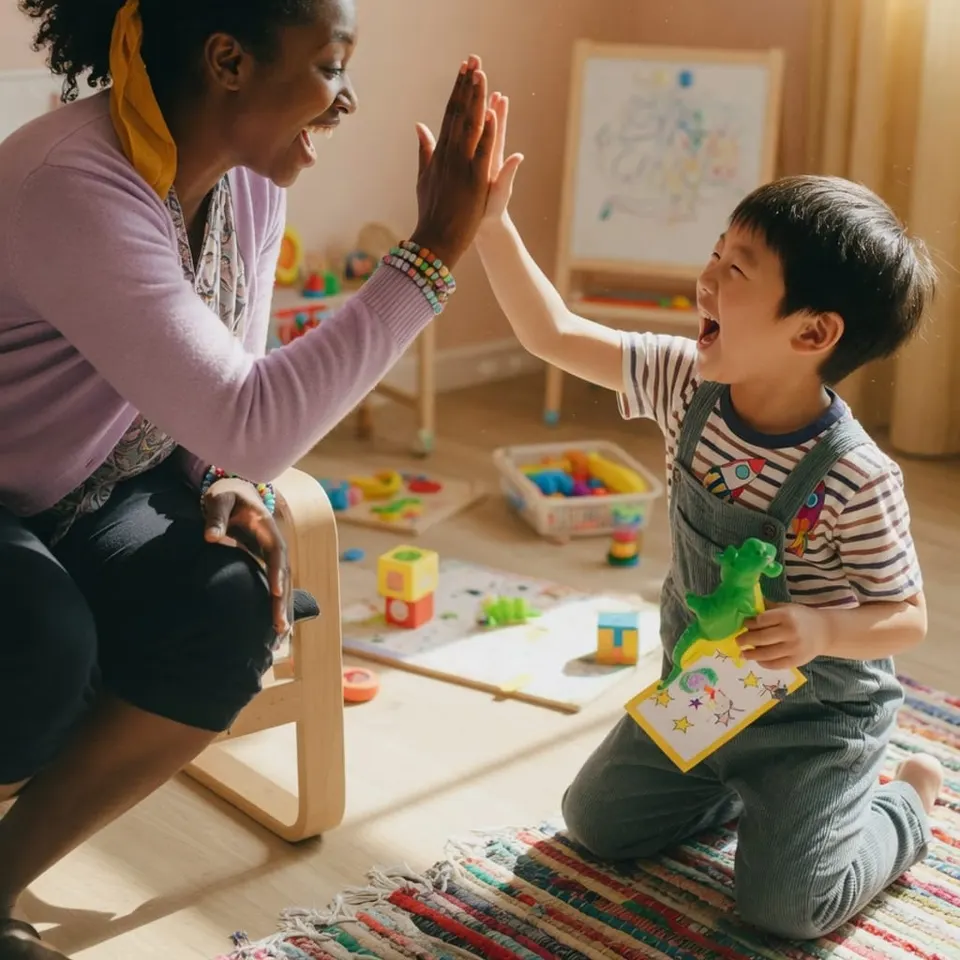
A BCBA will first assess your child's strengths and preferences-often starting with their favorite solo activity. The therapist then uses natural environment teaching (NET) to gradually incorporate another person into the play. For example, if a child loves building with blocks, the therapist may join in parallel play, then model an exchange of blocks. Over time, the child learns to initiate and respond during play.
Goal of Increasing Social Engagement
ABA therapy targets specific social skills: joint attention, sharing, turn-taking, and responding to peers. Goals are broken into small, achievable steps. Data is tracked to ensure progress. Many children move from solitary to parallel to cooperative play within a supportive ABA program. Insurance and Medicaid typically cover these services, and Get ABA Therapy simplifies finding an in-network provider.
Costs, Insurance, and Getting Started
The cost of ABA therapy can be a concern for families, but most insurance plans offer coverage. Medicaid also covers ABA in many states. Understanding your benefits is the first step toward accessing services.
Insurance Coverage for ABA
Under the Affordable Care Act, many individual and group health plans must cover autism-related services. However, coverage details vary. Some plans require a formal ASD diagnosis and prior authorization. Deductibles and co-pays may apply. The free matching service at Get ABA Therapy works with families to find BCBA-led providers that accept their specific insurance, saving time and stress.
Medicaid and State Programs
Medicaid often covers ABA therapy for children under 21 if it is deemed medically necessary. Each state's Early Intervention and school-based programs may also provide play-based support. You do not need a diagnosis to start Early Intervention (Part C) in many states; evaluations are free. Get ABA Therapy can help you navigate these options and connect with vetted providers.
How Get ABA Therapy Simplifies the Process
Get ABA Therapy is a free service that matches families with BCBA-led ABA providers based on location, insurance, and specific needs. There is no cost to you. Their team coordinates with providers to verify insurance and schedule initial assessments. This removes the burden of calling multiple clinics and waiting for callbacks.

Practical Tips for Encouraging Interactive Play at Home
While professional therapy is essential, you can also create an environment that supports social play at home. The key is to make interaction feel safe and rewarding.
Follow Your Child's Lead
Observe what your child enjoys during solo play-whether it's stacking cups, watching a spinning toy, or reading books. Join in by doing the same activity nearby without demanding interaction. This parallel participation builds trust. Over days or weeks, slowly introduce slight changes, like handing your child a piece or making a brief comment.
Create Structured Play Routines
Children with autism often thrive on routine. Set aside 10-15 minutes each day for "together play." Use a visual schedule to show that after snack comes playtime with Mom or Dad. During this time, keep expectations low and praise any glance, smile, or attempt to share. Consistency reduces anxiety.
Use Visual Supports and Social Stories
Social stories-short narratives with pictures-can explain simple play scenarios, like "When I play with my friend, we can take turns with the car." Visual supports (cards showing steps of a game) help autistic children understand the sequence of interaction. Many BCBA therapists can create these tools for you.
Common Mistakes to Avoid
It is natural to worry when your child plays alone, but certain responses can be counterproductive.
Forcing Interaction
Pushing a child into group play before they are ready can cause distress and increase avoidance. Instead, celebrate small steps like parallel play. Let your child set the pace. ABA therapy uses positive reinforcement, not pressure.
Assuming It's Just a Phase
While all children develop differently, persistent solitary play without any social interest after age three is not typical. Ignoring it may delay access to early intervention. If you have concerns, seek an evaluation. Earlier support often leads to better outcomes.
Ignoring Other Developmental Delays
Solitary play rarely occurs in isolation. Look for delays in language, motor skills, or adaptive behaviors. A child who plays alone and also has trouble communicating needs or following directions may benefit from a comprehensive assessment.
Final Thoughts
If your child only plays alone, it does not automatically mean autism-but it is a sign worth exploring. With the right support, many children learn to enjoy interactive play and build meaningful relationships. A BCBA-led ABA program can provide the structured, compassionate teaching these children need. Get ABA Therapy is here to help you find that support, at no cost, so you can focus on what matters most: watching your child grow.